
'Think Globally, Learn Locally'
'...Not just to have 'something for everyone' but to excite everyone about something...' Or, in other words: Civic Engagement.

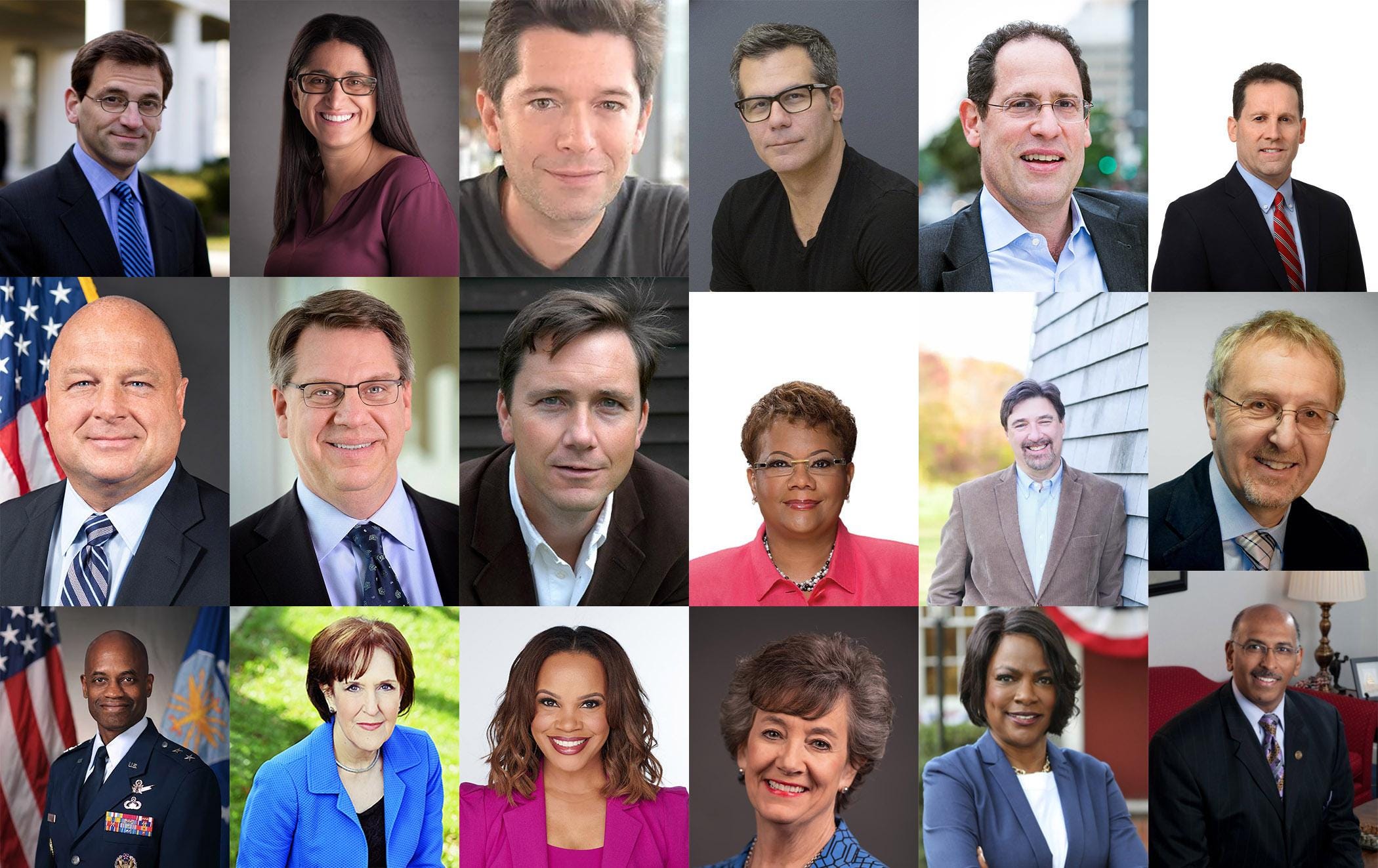
Over the years, I’ve been asked often ‘what’s the theme?’ about the Jefferson Educational Society’s Global Summit, an event series that began in 2009 as a two-and-a-half-day affair featuring five events that’s grown into weeks-long experience that draws upwards of seven thousand attendees. (Full disclosure: I get asked that question because I have been a part of the JES team, in various roles and capacities, since 2015, but have always played a role in Global Summit.)
My go-to answer has been ‘the theme is: there isn’t a theme!’.
Which I explain with lines like, “The benefit of the Summit is that we strive to offer a well-rounded lineup of speakers covering a wide range of topics. Our goal is not just to have ‘something for everyone’ but to excite everyone about something.”
That is what I told Erie Reader’s Erin Phillips for her excellent preview feature on this year’s lineup. (Full Disclosure Part II: I am a big fan of Erin’s writing, and her editing skills, which I know firsthand, as she serves as the Reader’s managing editor [I post I held from when the publication launched in 2011 until 2015], and I’m a contributing editor there now. [What can I say — for a guy with a decent head of hair, I like wearing several hats!])
I stand by that line and the idea of a themeless-theme, because the Global Summit features a wide-range of topics from diverse experts on purpose. This year is no exception.
U.S. foreign policy, Russia and Ukraine, the evolving conflict in the Middle East, Campaign 2024? Check.
The interplay between public health and infrastructure? Check.
Climate change and its impact on the way — and what — we drink and eat? Check.
The future of the American city? Check.
Poverty in America, and the politics and policy in place today informing the future? Check.
State of the GOP? Check.
Artificial intelligence? Check.
Why the modern male is struggling, and what to do about it? Check.
Promoting racial and economic equity through community relations? Check.
Insights on the decline of democracy? Check.
What lessons the Ancient World stands to teach us today? Check.
How to lift up diversity, equity, and inclusion in aerospace? Check.
The Road to the White House and the State of Media? Check.
The state of American politics as seen by those who’ve served? Check.
The motto for the Summit has become: Think globally; learn locally. A twist on the popular guidance think globally, act locally, I like that adaptation because the Summit brings big ideas to the smaller metro of Erie, Pennsylvania, where residents gather together to learn together. That is, the size of any town isn’t the measure of residents’ intellectual curiosity.
So, perhaps, put another take on the theme is: Civic engagement.
I’ve recently been writing about the importance of civic engagement — first in an article for The Chronicle of Philanthropy, followed by some additional commentary on the topic in light of that article on my Substack.
In the latter, I explain why civic engagement and education are important topics to me personally and professionally. At the Summit, I’ve seen that civic engagement in action, like how several hundred (including high school Model U.N. students) filled the gymnasium at Gannon University to learn from foreign policy expert, former adviser to the President, and Brookings Institution Senior Fellow Dr. Fiona Hill:
And how a panel of experts, including José Muñoz, Reuben Jacobson, and Brian Polito, discuss the importance of ‘community schools’ nationally and locally:
And the power and importance of exploring ‘The Future of Race in America’, led by professor, researcher, and Brookings Fellow and Director of the Lab for Applied Social Science Research Dr. Rashawn Ray, has:
Just as examining ‘The Future of Immigration’ with Anahita Panahi, the Refugee Campaign Manager at the Coalition for Humane Immigrant Rights (CHIRLA) does here:
And how dignity is being restored to the trade skills and the role an innovative place like the community woodworking shop and school, HatchSpace, is playing, with the Tom Bodett here:
And how the industrial heartlands, both here and abroad, are being rejuvenated and progress is being made to heal polarized politics while strengthening western democracies with an international panel featuring John Austin, Andy Westwood, Florence Hennart, Tiziano Dell’Olmo, Benoît Nadler, Hélène Laueriere, Michael Schwarze-Rodrian, and John Morgan here:
There are, of course, more examples, which all feature the same macro theme of civic engagement through civic education.
What does that look like in action? I plan to write about that in a future post.